Analyst consensus
Strong Buy ratings across US stocks, with each one's Gem Score.
Daily stock scanner · Early access
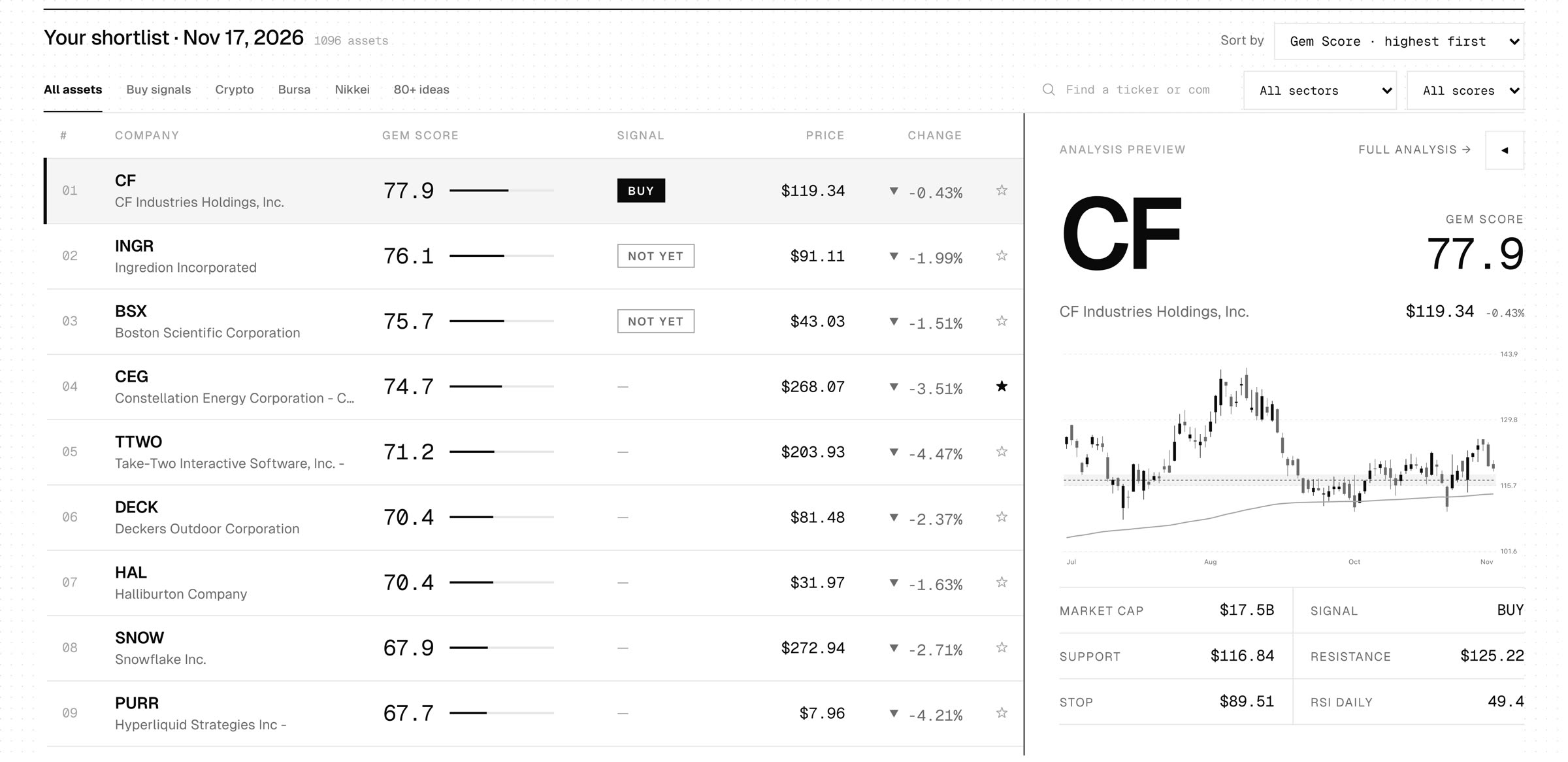
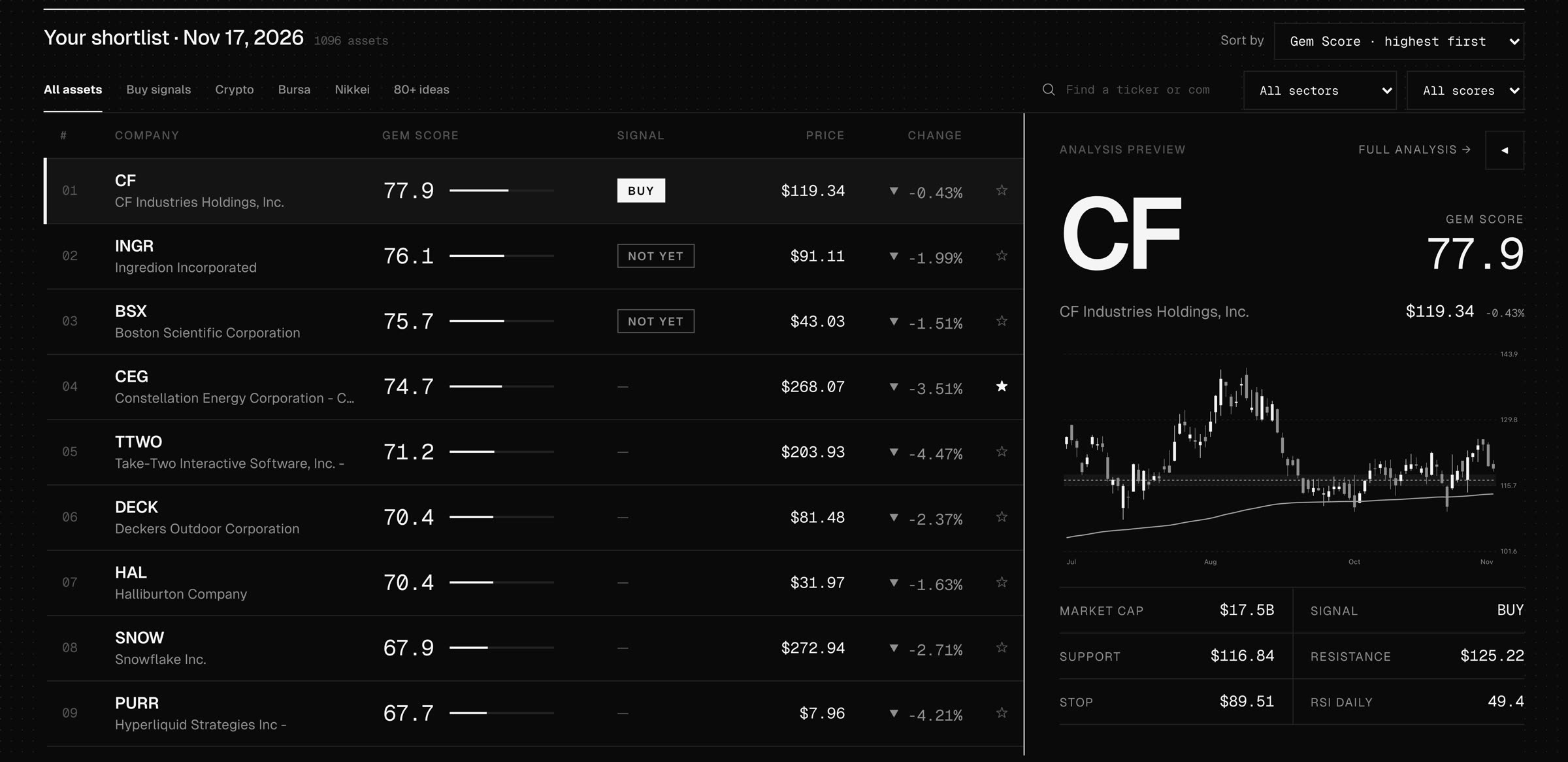
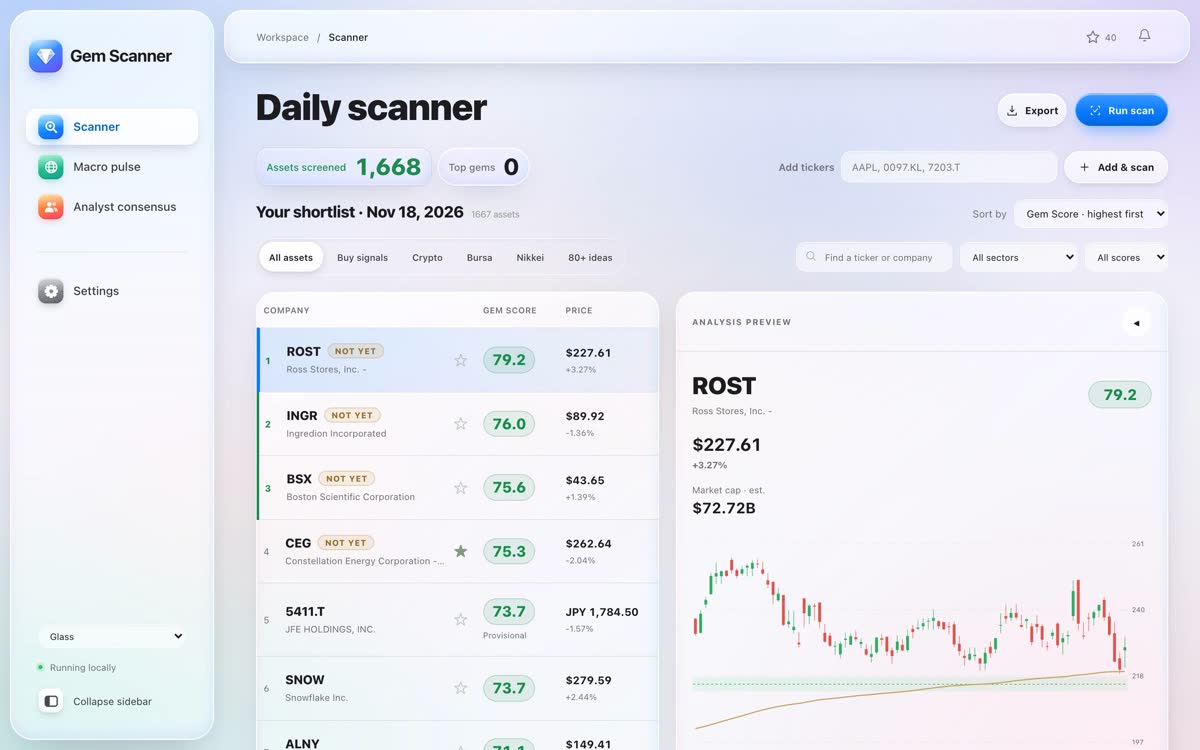
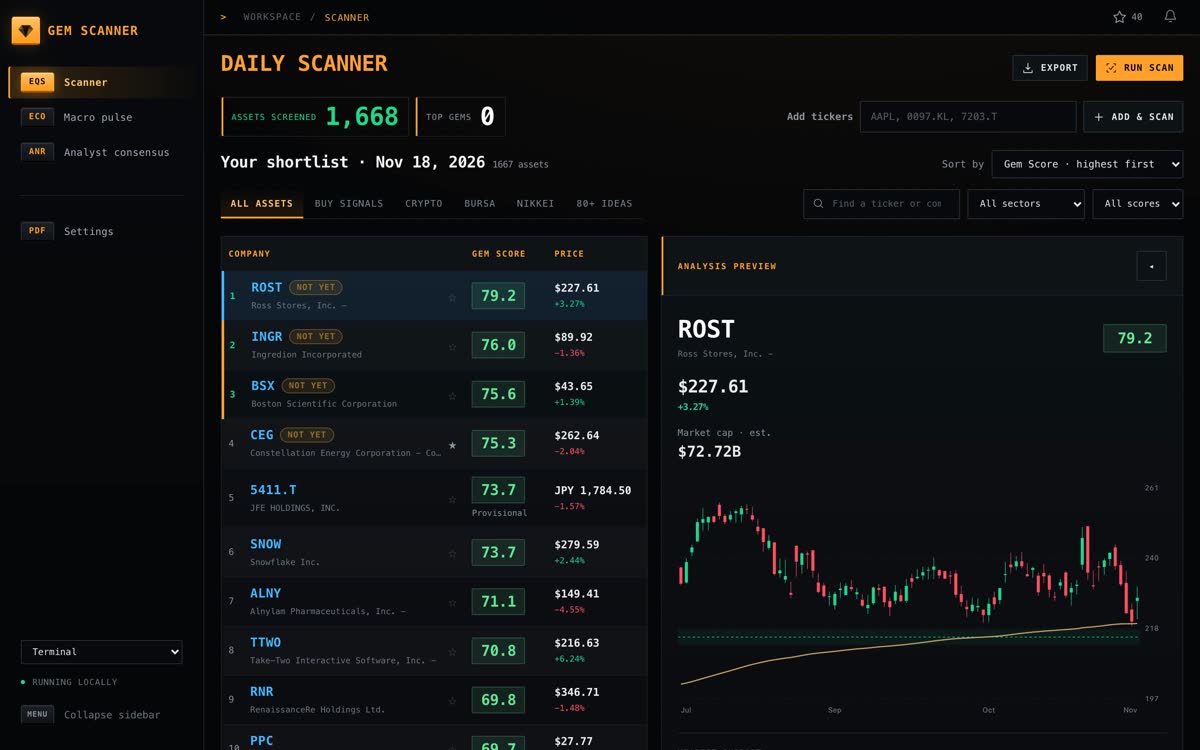
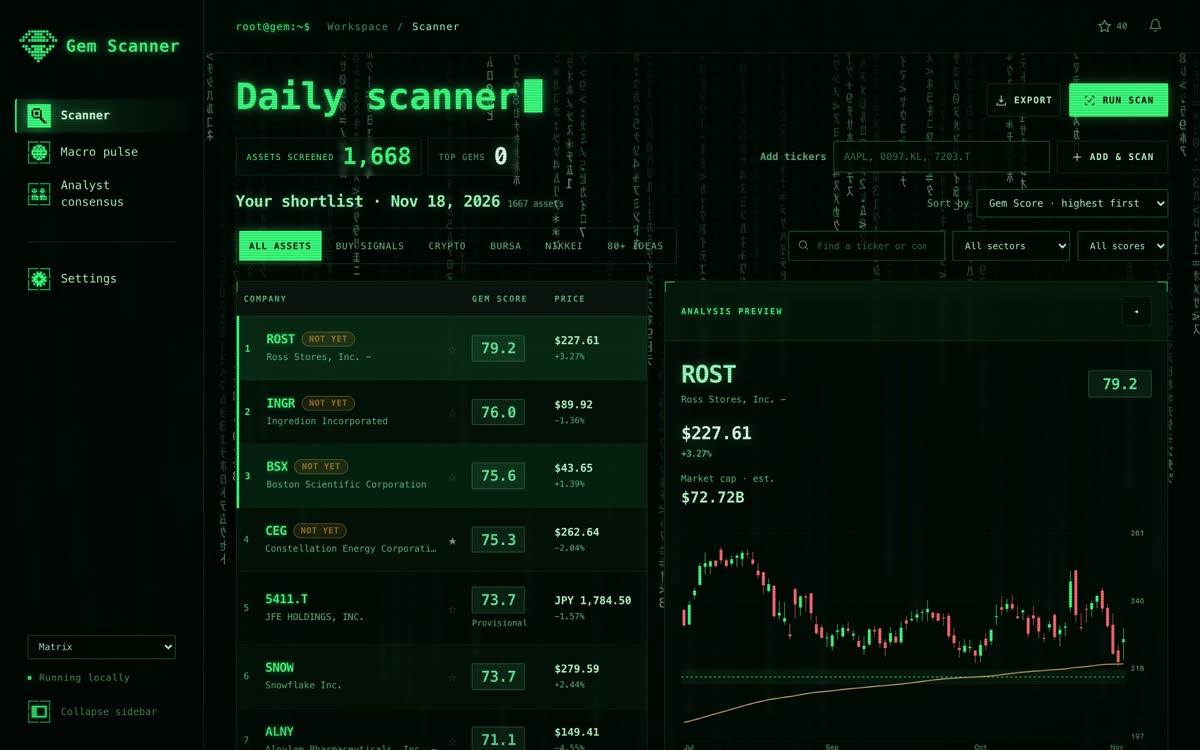
Gem Scanner screens US stocks, crypto, Bursa Malaysia, Nikkei and Xetra after every close. It scores each setup from 0 to 100 and raises a BUY only when every validated rule passes, with the stop and sell levels already drawn on the chart.
How it works
After each completed session, the scanner reads years of daily history for every asset in your universe: the S&P 500, Russell 1000, Russell 2000 or the whole Nasdaq Composite, plus crypto, Bursa Malaysia, Nikkei, Xetra and your own tickers.
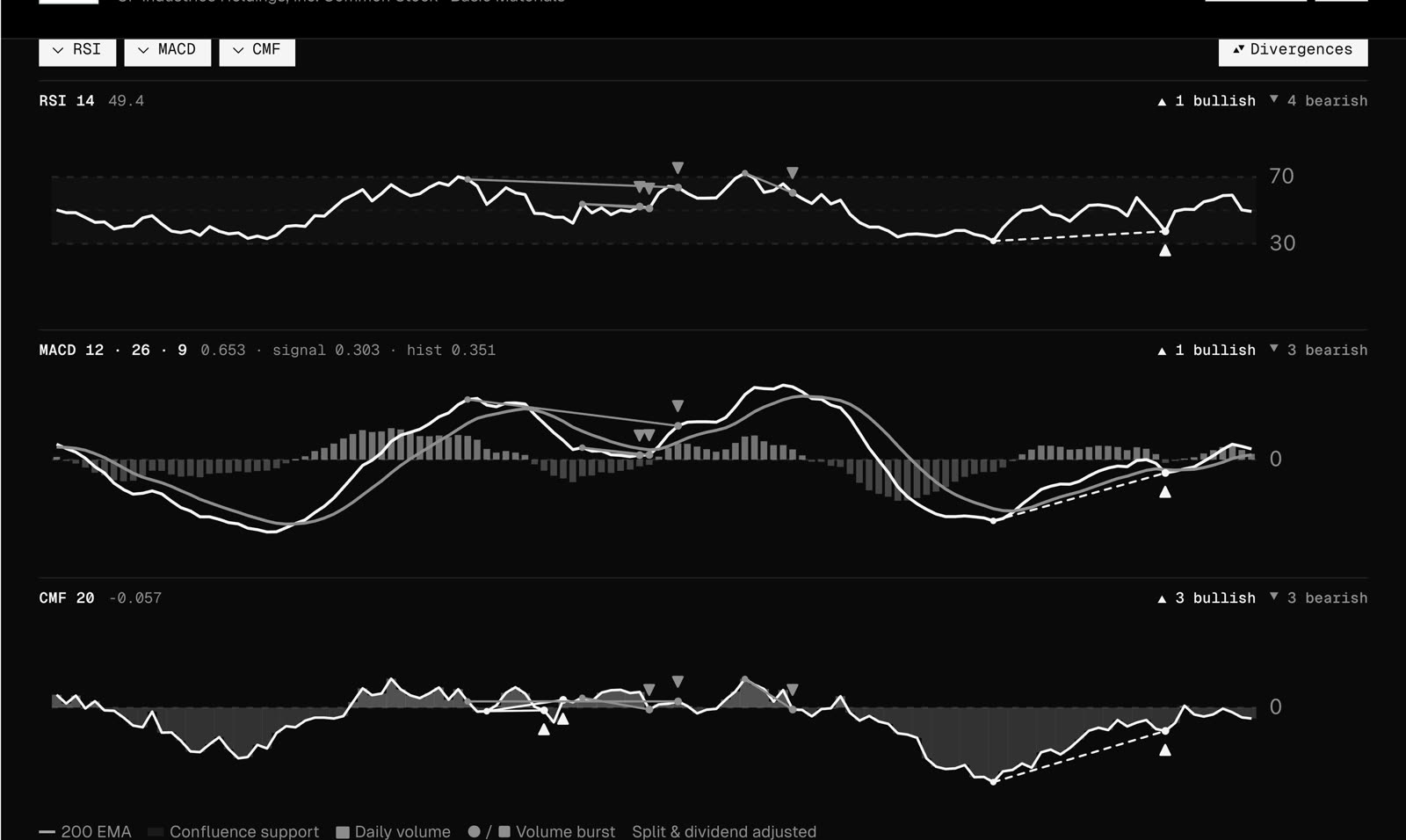
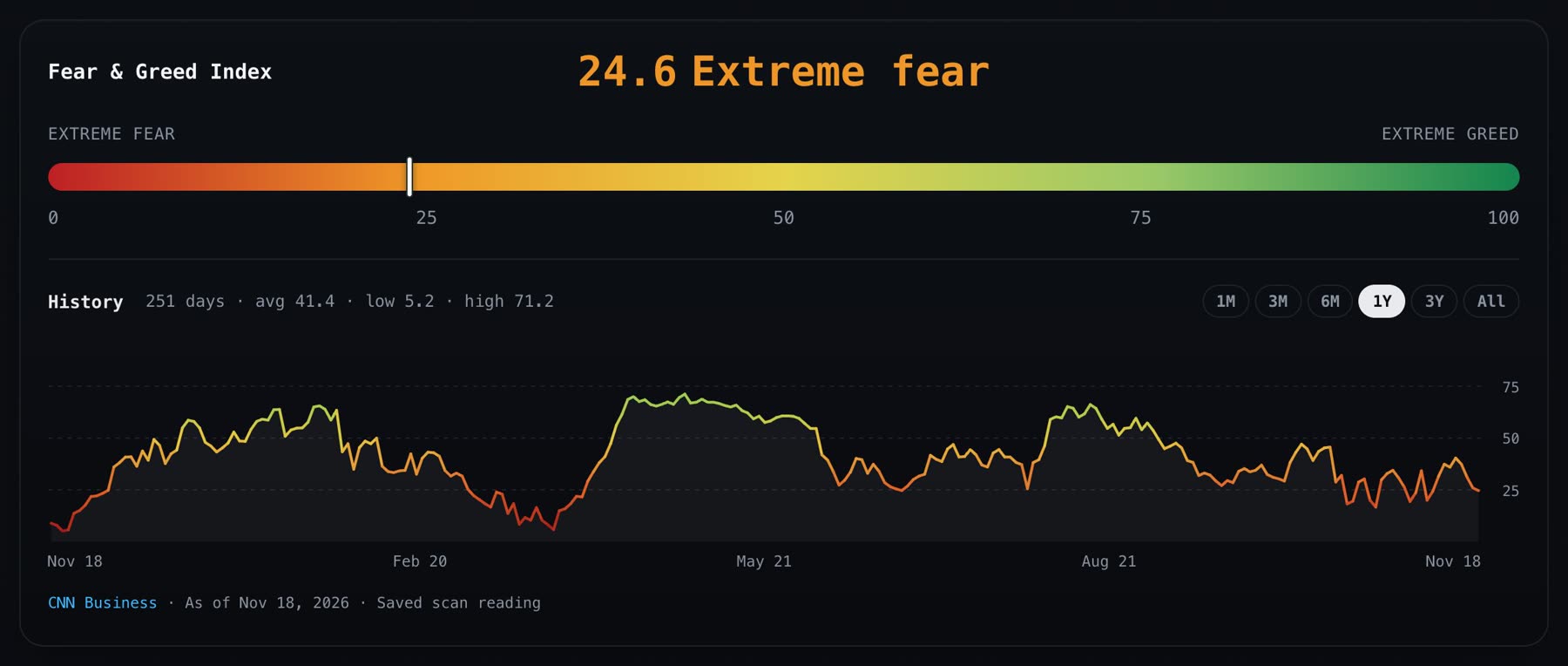
The Gem Score rates each chart from 0 to 100: support confluence, Fibonacci, the 200 EMA, RSI, MACD and money-flow divergences (each scored on its own), volume, the macro regime and Fear & Greed.
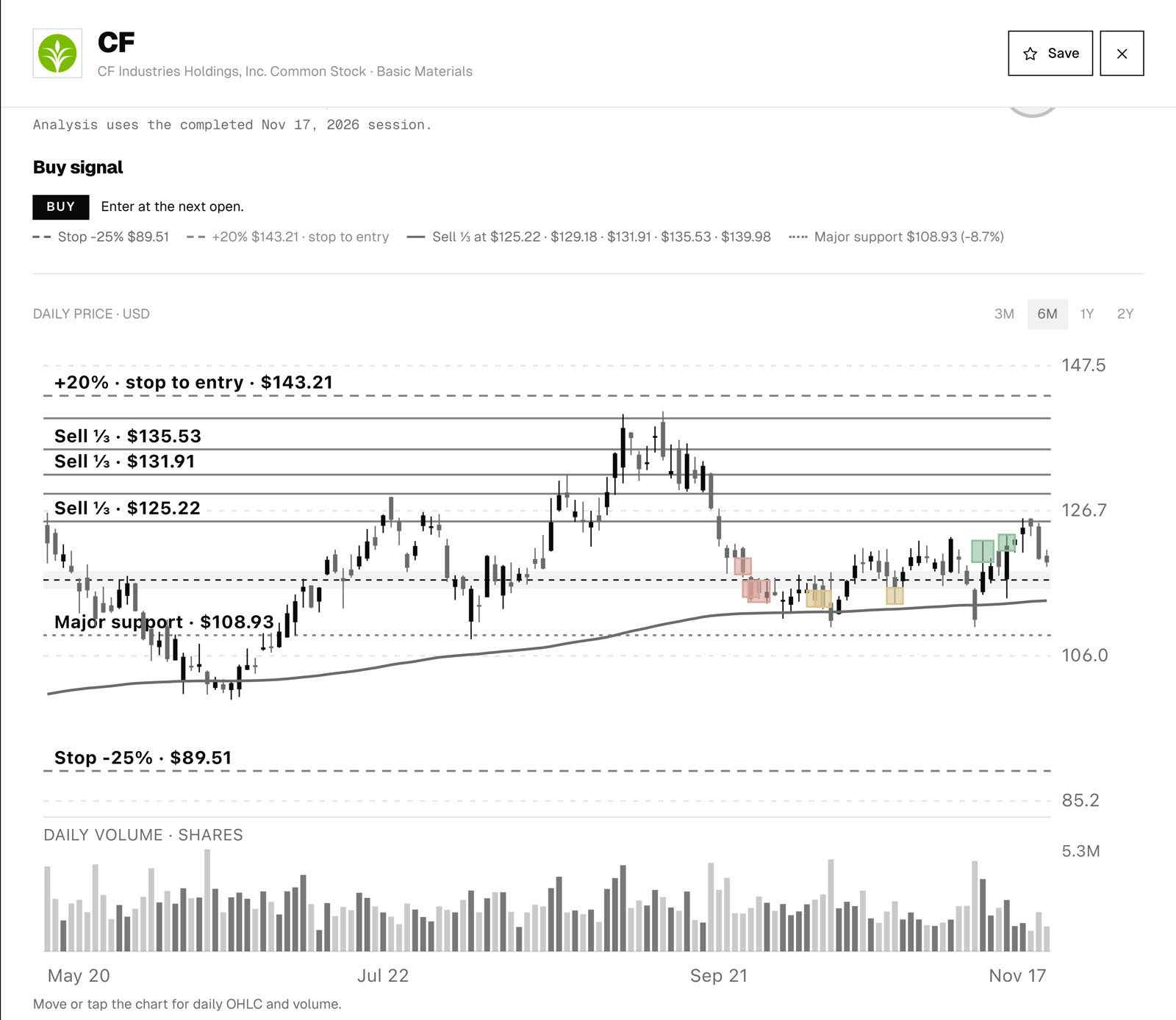
BUY appears only at a Gem Score of 75+, when every entry check passes and the day didn't fall more than 5%. Each BUY carries its exit plan: a −25% disaster stop, stop to entry at +20%, and a third sold at each resistance zone.
Most days, the answer is no. A short list of “not yet” beats a long list of maybes.
Full analysis
Macro pulse
Also inside
Strong Buy ratings across US stocks, with each one's Gem Score.
Keep your ideas in sight and hear when a score or signal changes.
A one-page summary of the session's qualifying ideas.
Company research and an AAOIFI Shariah screen, with sources and stated unknowns.
US stocks, crypto, Bursa Malaysia, Nikkei 225 and Xetra.
Mono in light or dark, Glass, Terminal and Matrix.
Validation
Study sp500-staged 1.11 · Oct 28, 2025 – Oct 28, 2026 · Run Oct 29, 2026
All 11 closed trades were winners; the three losers were still open at the end of the window.
The study replays the scanner's BUY rules on every S&P 500 company for each completed session in the window, entering at the next open. Exits follow the same plan the app draws: −25% stop, stop to entry at +20%, a third sold at each resistance zone and, once armed, on confirmed bearish RSI, MACD or CMF divergences. Open positions are valued at their last mark. The account figure assumes five equal slots, not compounded.
Sixteen trades is a small sample. The rules were chosen after research on this window and an earlier check year, so these results are in-sample and will not hold exactly going forward.